, \ . ... ( 7 88 ) „
The W'igeon or Whewer. Anas Fiftularij
Numb. XCIX.
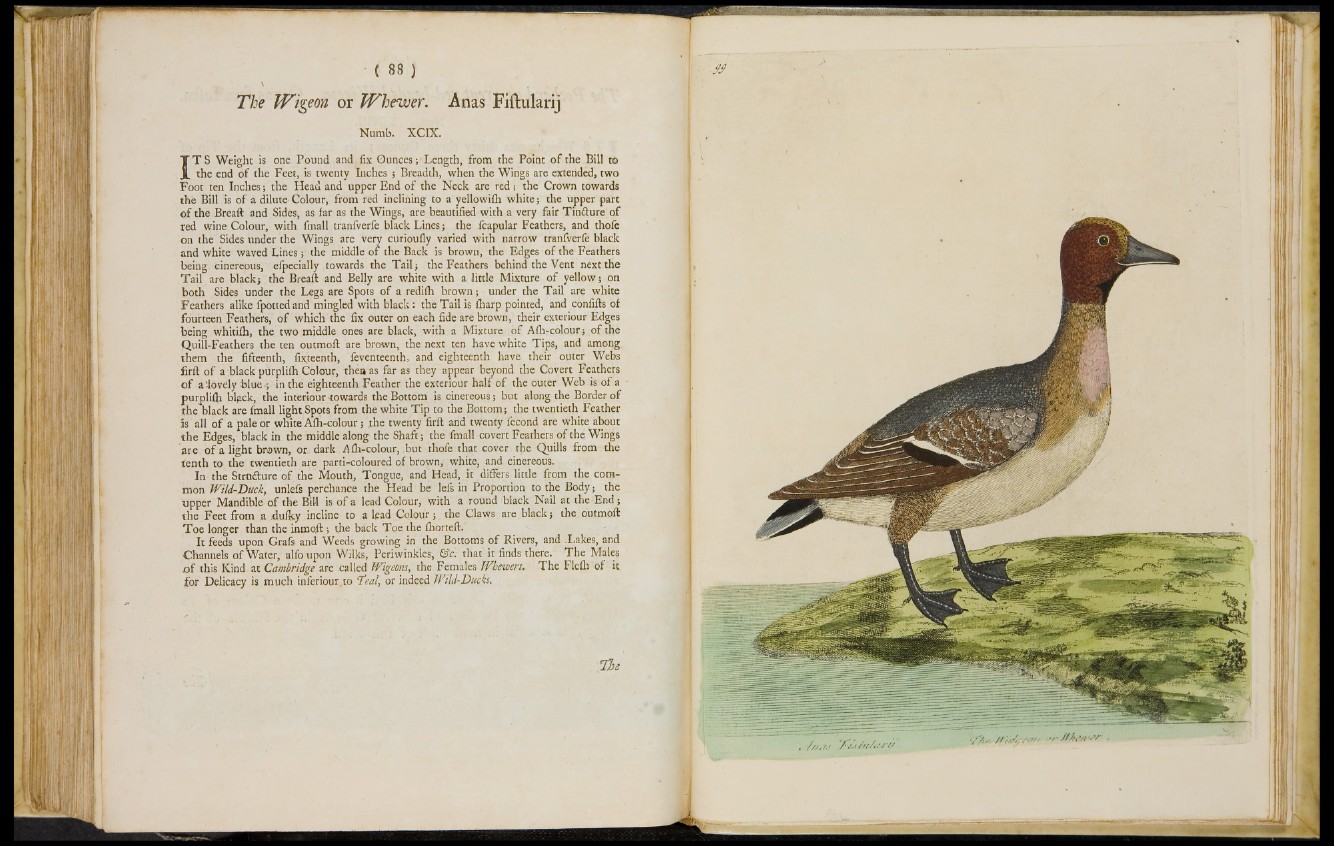
IT S Weight is one Pound and fix Ounces;1 Length, from the Point of the Bill to
the end of the Feet, is twenty Inches ; Breadth, when the Wings are extended, two
Foot ten Inches; the Head and upper End of the Neck are red; the Crown towards
the Bill is of a dilute-Colour, from red inclining to a yellowilh white; the upper part
of the Breaft and Sides, as far as the Wings, are beautified with a very fair Tin&ure of
red wine Colour, with fmall tranfverfe black Lines; the fcapular Feathers, and thole
on the Sides under the Wings are very curioully varied with narrow tranfverfe black
and white waved Lines; the middle of the Back is brown, the Edges of the Feathers
being cinereous, efpecially towards the Tail; the Feathers behind the Vent next the
Tail are black; the Breaft and Belly are white with a little Mixture of yellow; on
both Sides under the Legs are Spots of a redilh brown; under the Tail are white
Feathers alike fpottedand mingled with black: the Tail is lharp pointed, and confifts of
fourteen Feathers, o f which the fix outer on each fide are brown, their exteriour Edges
being whitilh, the two middle ones are black, with a Mixture of Alh-colour; of the
Quill-Feathers the ten outmoft are brown, the next ten have white Tips, and among
them the fifteenth, fifteenth, feventeenth, and eighteenth have their outer Webs
firft of a .black purplilh Colour, then as far as they appear beyond the Covert Feathers
o f a'-lovely blue -; -in the eighteenth Feather the exteriour half of the outer Web is of a
purplilh black, the interiour -towards the Bottom is cinereous; but along the Border of
the black are fmall light Spots from the white Tip to the Bottom; the twentieth Feather
5s all o f a pale or white Alh-colour; the twenty firft arid twenty fecond are white about
the Edges, black in the middle along the Shaft; the fmall covert Feathers of the Wings
are of a light brawn, or dark Alh-colour, but thofe that cover the Quills from the
tenth to the twentieth are parti-coloured of brown, white, and cinereous.
In the Strufture of the Mouth, Tongue, and Head, it differs little from the common
Wild-Duck, unlefs perchance the Head be lefs in Proportion to the Body ; the
upper Mandible of the Bill is of a lead Colour, with a round black Nail at the End;
the Feet from a d.ufky incline to a lead Colour; the Claws are black; the outmoft
Toe longer than the inmoft ; the back Toe the ihorteft.'
It feeds upon Grafs and Weeds growing in the Bottoms of Rivers, and .Lakes, arid
Channels of Water, alfoupon Wilks, Periwinkles, &c. that it finds there. The Males
o f this Kind at Cambridge are called Wigetms, the Females fVhewers. The Flelh of it
for Delicacy is much inferiour.to I'eal, or indeed Wild-Ducks.
rtbe